
The Personal Science Research Group
Personal science is the practice of using empirical methods to answer questions arising in daily life. The Personal Science Research Group builds tools, develops methods, publishes case studies, and shares discoveries made through doing, teaching and supporting “science at a human scale.”
Members

Thomas Blomseth Christiansen is a Danish technologist who spent five years tracking more than ten thousand sneezes to debug his grass pollen allergy. He is the cofounder of TOTTI Labs, which creates tools and methods for active self-tracking, with a focus on “precision psychotherapy.” He was the subject of the documentary Quantified Life (2017).
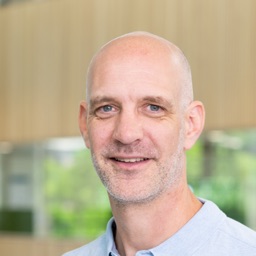
Martijn de Groot is a Dutch medical scientist and managing director of Health Innovation Labs at Radboud University Medical Center. He has been studying, publishing, and teaching on Quantified Self, digital health, and personal science since 2011. He was formerly cofounder and director of the Quantified Self Institute at Hanze University of Applied Sciences.
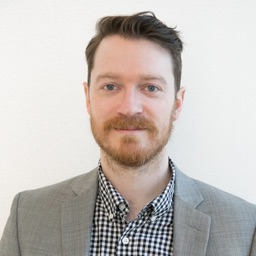
Steven Jonas was the editor and information architect at QS Labs during its formative years, when he helped hundreds of presenters craft their self-research into public narratives. He has been self-tracking since 2005, starting with sleep and expanding into knowledge retention, stress, music, and other topics. He works professionally as a data analyst.

Jakob Eg Larsen is an associate professor at the Technical University of Denmark (DTU), where he cofounded and leads the Mobile Informatics & Personal Data Laboratory. He cofounded Quantified Self Copenhagen. His research concerns personal informatics, self-tracking, and data visualization, focusing on how people can make useful discoveries from their own data. He is the cofounder of TOTTI Labs.
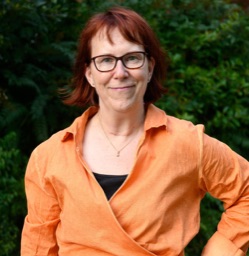
Sara Riggare was diagnosed with Parkinson’s disease at thirty-two, after nearly two decades of unexplained symptoms. In 2022, she became the first person to defend a PhD thesis based on self-research. She is a researcher at Uppsala University in Sweden, where she pioneers innovative approaches for health and self-care. Her research focuses on chronic knowledge, meaning the knowledge and expertise that is needed for living a good life, in the presence of chronic conditions.
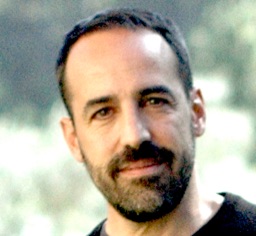
Gary Isaac Wolf is a journalist and author and formerly a contributing editor at Wired. In 2008, he cofounded Quantified Self as an international community of users and makers of self-tracking tools. He is currently the director of Article 27, a nonprofit supporting participation in science.
Publications
Selected work by members of the group on personal science, the Quantified Self, and self-tracking.
- 2026Riggare S, Asante K, Bereczky T, Dieker E, Jackman M, Jayswal N, Mujkic L, Richards DP, Schriemer R, Scott Duncan T, Tufte J. Beyond Self-Management: Introducing Meta-Selfcare as a Framework for Developing Practical Wisdom in Chronic and Long-Term Conditions. JMIR Preprints (preprint). link
- 2025de Groot M. A Single-Case (N-of-1) Study of Tourette Syndrome Using Personal Science to Support Self-Care. Proceedings of Citizen Science for Health 2025 (CS4Health2025). doi.org/10.22323/1.524.0024
- 2024de Groot M. One Button Tracker — A Simple and Low-Effort Instrument for In-the-Moment Self-Tracking.
- 2024Kloppenborg K, Price Ball M, Jonas S, Wolf G, Greshake Tzovaras B. Co-Designing a Wiki-Based Community Knowledge Management System for Personal Science. Royal Society Open Science. doi.org/10.1098/rsos.240275
- 2020Wolf G, De Groot M. A Conceptual Framework for Personal Science. Frontiers in Computer Science. doi.org/10.3389/fcomp.2020.00021
- 2020Riggare S. Patient researchers — the missing link? Nature Medicine. doi.org/10.1038/s41591-020-1080-4
- 2019Riggare S, Scott Duncan T, Hvitfeldt H, Hägglund M. “You have to know why you’re doing this”: a mixed methods study of the benefits and burdens of self-tracking in Parkinson’s disease. BMC Medical Informatics and Decision Making. doi.org/10.1186/s12911-019-0896-7
- 2019Grant A, Wolf G, Nebeker C. Approaches to governance of participant-led research: a qualitative case study. BMJ Open. doi.org/10.1136/bmjopen-2018-025633
- 2019Grant A, Wolf G. Free-Living Humans Cross Cardiovascular Disease Risk Categories Due to Daily Rhythms in Cholesterol and Triglycerides. Journal of Circadian Rhythms.
- 2018De Groot M, Drangsholt M, Martin-Sanchez F, Wolf G. Single Subject (N-of-1) Research Design, Data Processing, and Personal Science. Methods of Information in Medicine. doi.org/10.3414/ME17-03-0001
- 2018Christiansen T B. The 1-Person Laboratory of the Quantified Self Community. Metric Culture. link
- 2018Riggare S, Hägglund M. Precision Medicine in Parkinson’s Disease – Exploring Patient-Initiated Self-Tracking. Journal of Parkinson’s Disease. doi.org/10.3233/JPD-181314
- 2018Chu L, Shah A, Rouholiman D, Riggare S, Gamble J. Patient-Centric Strategies in Digital Health. Digital Health: Scaling Healthcare to the World. link
- 2018Kooiman T, de Groot M, Hoogenberg K, Krijnen W, van der Schans C, Kooy A. Self-tracking of Physical Activity in People With Type 2 Diabetes: A Randomized Controlled Trial. CIN: Computers, Informatics, Nursing.
- 2018Lentferink A, Polstra L, de Groot M, Oldenhuis H, Velthuijsen H, van Gemert-Pijnen L. The Values of Self-tracking and Persuasive eCoaching for a Workplace Stress Management Application: A Qualitative Study. Persuasive Technology.
- 2018Christiansen T. Which Grasses Aggravate My Allergies? Quantified Self Show & Tell. link
- 2017Fokkema T, Kooiman T, Krijnen W, van der Schans C, de Groot M. Reliability and Validity of Ten Consumer Activity Trackers Depend on Walking Speed. Medicine & Science in Sports & Exercise. doi.org/10.1249/MSS.0000000000001146
- 2016Wolf G. The Quantified Self: Reverse Engineering. Quantified: Biosensing Technologies in Everyday Life.
- 2016Rapp A, Cena F, Kay J, Kummerfeld B, Hopfgartner F, Plumbaum T, Larsen J, Epstein D, Gouveia R. New Frontiers of Quantified Self 2: Going Beyond Numbers. UbiComp 2016 (workshop). doi.org/10.1145/2968219.2968331
- 2016Rapp A, Cena F, Kay J, Kummerfeld B, Hopfgartner F, Larsen J, Van Den Hoven E. FuturePD: The Future of Personal Data. CEUR Workshop Proceedings.
- 2015Picard R, Wolf G. Guest Editorial: Sensor Informatics and Quantified Self. IEEE Journal of Biomedical and Health Informatics. doi.org/10.1109/JBHI.2015.2462372
- 2015Rapp A, Cena F, Kay J, Kummerfeld B, Hopfgartner F, Plumbaum T, Larsen J. New Frontiers of Quantified Self. UbiComp ’15. doi.org/10.1145/2800835.2807947
- 2015Kooiman T, Dontje M, Sprenger S, Krijnen W, van der Schans C, de Groot M. Reliability and Validity of Ten Consumer Activity Trackers. BMC Sports Science, Medicine and Rehabilitation. doi.org/10.1186/s13102-015-0018-5
- 2015Dontje M, de Groot M, Lengton R, van der Schans C, Krijnen W. Measuring Steps with the Fitbit Activity Tracker: An Inter-Device Reliability Study. Journal of Medical Engineering & Technology. doi.org/10.3109/03091902.2015.1050125
- 2013Larsen J, Cuttone A, Lehmann S. QS Spiral: Visualizing Periodic Quantified Self Data. Personal Informatics in the Wild (CHI 2013 Workshop).
- 2013de Groot M, van der Wouden J, van Hell E, Nieweg M. Evidence-Based Practice for Individuals or Groups: Let’s Make a Difference. Perspectives on Medical Education. doi.org/10.1007/s40037-013-0071-2
- 2012Riggare S. Tracking Parkinsons and Medication. Quantified Self Show & Tell. link
- 2010Wolf G. The Data-Driven Life. The New York Times Magazine. link
- 2009Wolf G. Know Thyself: Tracking Every Facet of Life, from Sleep to Mood to Pain. Wired.
- n.d.Larsen J, Eskelund K, Christiansen T. Active Self-Tracking of Subjective Experience with a One-Button Wearable: A Case Study in Military PTSD.
Our approach to supporting personal science practice is described in detail in the book The Quantified Self: Learning to Observe. Learn about the book →