BLOG
Kids and QS at Quantified Self Conferences: Bill Schuller
June 25, 2018
To beat potential Summer boredom, hopefully this next highlighted project from Bill Schuller will give some inspiration. Bill Schuller presented QS Adventures with my Kids at the 2013 QS Global Conference in the Presidio, San Francisco. Bill started tracking his exercise and weight in 2010. His preschool-aged son, began to imitate Bill’s tracking behavior by regularly stepping…
BLOG
Kids and QS at Quantified Self Conferences: Victor Lee
June 22, 2018
Aligned with QS and learning, Victor Lee presents Quantifying with Kids at QS15 in San Francisco. As an educator, Lee spends most of his time thinking about how learning works. Lee discusses his QS project using a range of technologies (fitbit, Jawbone, Garmin) to track kids’ activities throughout their days. Lee helps the students work with their…
BLOG
Kids and QS at Quantified Self Conferences: Morgan Friedman
June 20, 2018
In the spirit of our upcoming QS18 Conference that will be focused on QS and learning, we want to share some great QS projects from past conferences that incorporate our greatest learners–children. The projects come from teachers and parents and even a student himself, presenting how they learn using QS methods. Summer is upon us and…
BLOG
SF Bay Area Meetup Recap
November 30, 2016
On November 17th, the Bay Area and SF Meetup groups hosted QS Show&Tell talks at WeWork Mid-Market. Thank you to everybody who came and presented. We saw some brilliant talks, including one about tracking during pregnancy with data challenging common, supposedly scientific pregnancy advice, and a talk outlining a fascinating self-study of bruxism (teeth grinding)…
BLOG
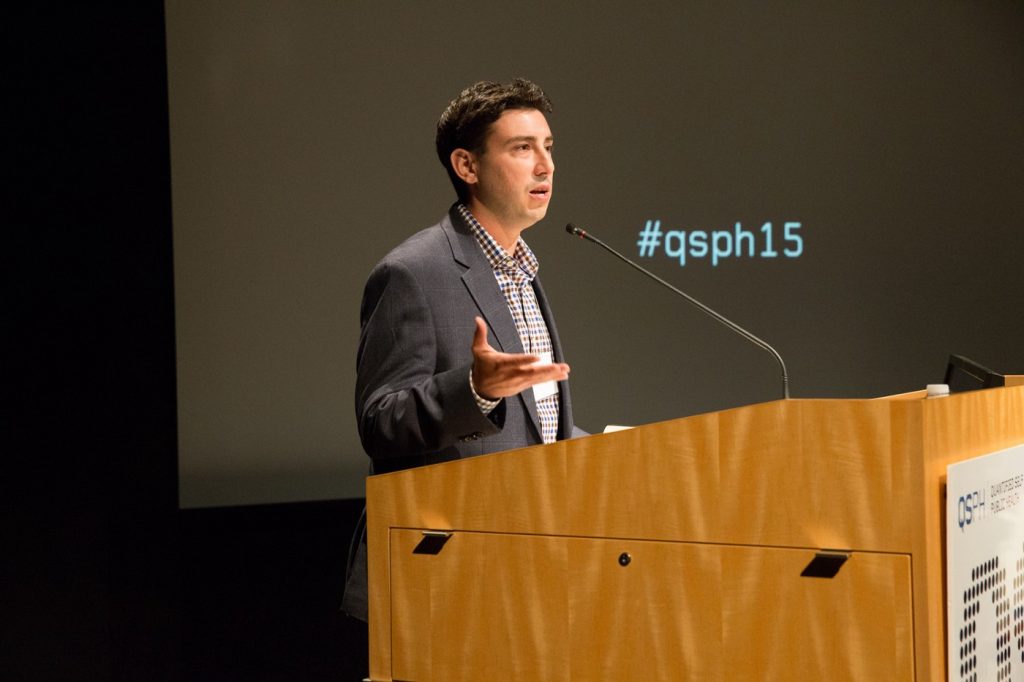
An Agenda for QS Public Health by Lori Melichar & Bryan Sivak
April 14, 2016
In this final talk from the QS Public Health Symposium, we asked two leading advocates for a culture of health to help set an agenda for our movement over the next year. Bryan Sivak is the former CTO of the US Department of Health and Human Services, and Lori Melichar is a director at the Robert Wood Johnson Foundation.
BLOG
Supporting User Innovation by Nate Heinztman
April 11, 2016
Nate Heintzman is a member of the research and development team at Dexcom, makers of the leading continuous glucose monitor for people with diabetes. In this talk, Nate explains why Dexcom has decided to treat its lead users as collaborators, even when their ingenuity, advocacy and inspiring impatience leads them to step beyond regulatory and business frontiers.
BLOG
Patients are the Real Scientists by Joyce Lee
April 8, 2016
Joyce Lee is a pediatric endocrinologist at the University of Michigan and a leader in developing methods of collaborative clinical research with patient communities. In this talk from QSPH15, Joyce describes why patients are leading the way in developing new kinds of science, experimentation, and models of communicating knowledge based on her experience working with CGM in the Cloud, an online group supporting the DIY data project Nightscout.
BLOG
Giving You a Choice by Howard Look
April 6, 2016
Howard Look is the founder and CEO of Tidepool.org, a non-profit open source effort to build better software for diabetes. He became a leading advocate for access after his daughter was diagnosed with type 1 diabetes and discovering how crucial data was being locked away in devices for managing the condition. In this talk from QSPH15, Howard describes the role of Tidepool and the larger challenge of opening up diabetes data.
BLOG
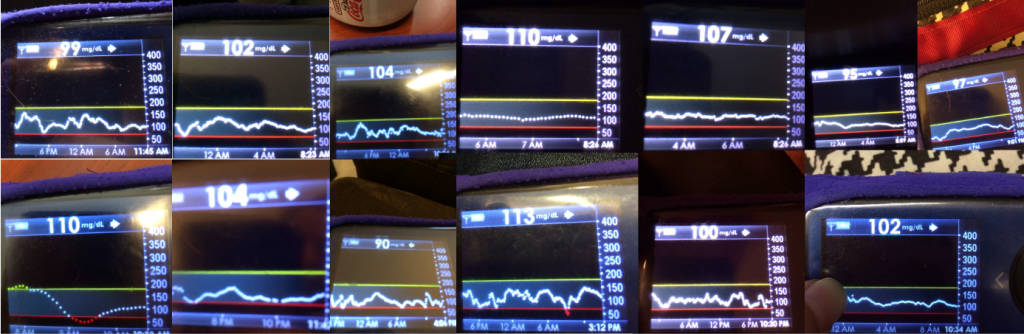
#WeAreNotWaiting by Dana Lewis
April 1, 2016
Dana Lewis and her partner Scott Leibrand have been developing a DIY artificial pancreas that is built on top of the data flows from Dana’s continuous glucose monitor. In this talk from QSPH15, Dana describes the role that access to data plays in the DIY pancreas, which has had immediate and profoundly positive effects on her life.
BLOG
Bridging the Gap by Aaron Coleman
March 30, 2016
Aaron Coleman has built his entire company, Fitabase, around the needs of researchers to authorize and integrate physical activity data from trackers like the Fitbit. In this talk from QSPH15, Aaron discusses what it takes to bridge the gap between the companies designing the devices generating health data and the researchers looking to make sense of it.
BLOG
Sharing Self-Collected Data by Andrei Pop
March 24, 2016
Andrei Pop is the co-founder of Human API, a platform for opening the world of self-collected data to health app developers. In this talk from QSHP15, Andrei argues for “data liquidity,” or democratizing health data sharing, as the key to unlocking value for all stakeholders.
BLOG
Making Health Data Accessible and Actionable by Drew Schiller
March 22, 2016
At QSHP15, Drew Schiller, the co-founder and CTO of Validic, a digital health data platform with many enterprise customers, shares his thoughts on how personal data can become more accessible and useful to the individuals who collect it.
BLOG
A New Type of Evidence by Dawn Lemmane
March 17, 2016
Dawn Lemanne is the founder of Oregon Integrative Oncology and leads the Independent Metabolic Research Group (iMeRG), a collaboration of licensed health professionals researching the effect of inexpensive lifestyle changes on managing chronic disease, using themselves as subjects. In this talk from QSPH15, Dawn discusses how the future of medical research may benefit from these kinds of single-subject trials.
BLOG
Learning from my N of 1 by Mark Drangsholt
March 15, 2016
Mark Drangsholt is a clinician scientist with a PhD in epidemiology who began self-tracking to gain insight into the sudden onset of episodes of irregular heartbeat, later diagnosed as atrial fibrillation (AF). In the years since, Mark has developed pioneering methods of self-investigation to solve his own health issues, which he describes in this talk from QSPH15 while explaining how these methods can drive advances in health discovery.
BLOG
Asking Myself 10,000 Questions by Brian Levine
March 10, 2016
Brian Levine is the co-founder of Tap2, the creator of the app younlocked. This tool helps users collect self-report data by asking questions during the phone unlocking process, a method that led Brian to answering almost 10,000 questions in a six-month period. In this talk from QSPH15, Brian shares details about his rich data set and the collection method that could become the foundation for many new personal and public health discoveries.
BLOG
Solving the Right Problem by Susannah Fox and Don Norman
March 8, 2016
In this discussion from QSPH15, Susannah Fox, the CTO of the U.S. Department of Health and Human Services, interviews cognitive scientist Don Norman, the author of the best-selling book The Design of Everyday Things, on how to bring human-centered design into public health.
BLOG
Opening Up Access by Madeleine Ball
March 3, 2016
Madeleine Ball, is the Director of Research for the Harvard Personal Genomes Project and co-founder of Open Humans, a platform and community that enables individuals to connect their personal data with research and citizen science. In this talk from QSPH15, Madeleine discusses the value of creating a new relationship between participants and scientists in which with both sides communicate, negotiate, and share responsibility over data.
BLOG
Make Advanced Self-Measurement More Accessible by Bob Evans
March 1, 2016
Bob Evans is the lead developer of PACO, an open source tool for supporting individual discovery and large scale participatory research. What began as a personal project to gauge his work experience by randomly querying himself throughout the day, PACO has grown into a platform for experimentation used in over one thousand projects designed by researchers, companies, and individuals. In this talk from QSPH15, Bob discusses how the individual quest for self-discovery connects with large scale research.
BLOG
The Patient Voice by Heidi Dohse
February 25, 2016
Heidi Dohse is “professional heart patient,” dedicated to bringing patient voices into the research environment as a member of the steering committee for the Health eHeart Alliance. In this talk from QSPH15, Heidi explains how the Health eHeart Alliance works as a valuable resource for humanizing the research process and tapping knowledge from the lived experience of patients to inform advances in healthcare.
BLOG
Participants at the Center by Michael Kellen
February 23, 2016
Michael Kellen is the Director of Technology at Sage Bionetworks, who was closely involved in the development of two of the apps that launched with Apple’s Research Kit: The Parkinson Disease mPower app and Share the Journey, a breast cancer survivors research app. In this talk from QSPH15, Michael explains what was involved in opening up a platform for large-scale research participation.