Sharing Self-Collected Data by Andrei Pop
March 24, 2016
Andrei Pop is the co-founder of Human API, a platform for opening the world of self-collected data to health app developers. In this talk from QSHP15, Andrei argues for “data liquidity,” or democratizing health data sharing, as the key to unlocking value for all stakeholders.
Making Health Data Accessible and Actionable by Drew Schiller
March 22, 2016
At QSHP15, Drew Schiller, the co-founder and CTO of Validic, a digital health data platform with many enterprise customers, shares his thoughts on how personal data can become more accessible and useful to the individuals who collect it.
A New Type of Evidence by Dawn Lemmane
March 17, 2016
Dawn Lemanne is the founder of Oregon Integrative Oncology and leads the Independent Metabolic Research Group (iMeRG), a collaboration of licensed health professionals researching the effect of inexpensive lifestyle changes on managing chronic disease, using themselves as subjects. In this talk from QSPH15, Dawn discusses how the future of medical research may benefit from these kinds of single-subject trials.
Shelly Jang: Can You See That I Was Falling In Love?
March 16, 2016
When someone comes into your life and takes up a special place in your heart, do they also occupy a similar place in your data? Shelly used GMvault to look through 5 years of Google Chat logs to “hunt for signals that I loved my husband and not somebody else.”
Learning from my N of 1 by Mark Drangsholt
March 15, 2016
Mark Drangsholt is a clinician scientist with a PhD in epidemiology who began self-tracking to gain insight into the sudden onset of episodes of irregular heartbeat, later diagnosed as atrial fibrillation (AF). In the years since, Mark has developed pioneering methods of self-investigation to solve his own health issues, which he describes in this talk from QSPH15 while explaining how these methods can drive advances in health discovery.
Asking Myself 10,000 Questions by Brian Levine
March 10, 2016
Brian Levine is the co-founder of Tap2, the creator of the app younlocked. This tool helps users collect self-report data by asking questions during the phone unlocking process, a method that led Brian to answering almost 10,000 questions in a six-month period. In this talk from QSPH15, Brian shares details about his rich data set and the collection method that could become the foundation for many new personal and public health discoveries.
A Public Infrastructure For Data Access
March 8, 2016
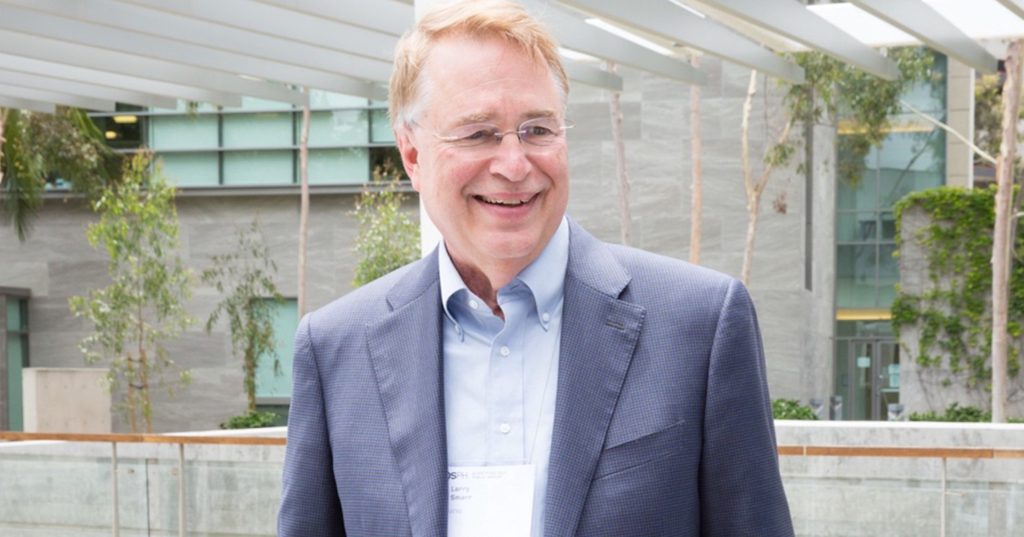
An interview with physicist Larry Smarr about his idea for a large scale, non-commercial, broadly accessible infrastructure for improving access to self-collected data for both personal and public benefit.
Solving the Right Problem by Susannah Fox and Don Norman
March 8, 2016
In this discussion from QSPH15, Susannah Fox, the CTO of the U.S. Department of Health and Human Services, interviews cognitive scientist Don Norman, the author of the best-selling book The Design of Everyday Things, on how to bring human-centered design into public health.
Stephen Cartwright: 17 Years of Location Tracking
March 4, 2016
In this talk from QS15, Steven Cartwright, associate director at the School of Art and Design at the University of Illinois at Urbana-Champaign, shows how seventeen years of location tracking has given him a wealth of data to explore in the form of three-dimensional data visualization sculptures.
Opening Up Access by Madeleine Ball
March 3, 2016
Madeleine Ball, is the Director of Research for the Harvard Personal Genomes Project and co-founder of Open Humans, a platform and community that enables individuals to connect their personal data with research and citizen science. In this talk from QSPH15, Madeleine discusses the value of creating a new relationship between participants and scientists in which with both sides communicate, negotiate, and share responsibility over data.
Paul LaFontaine: Using Heart Rate Variability to Analyze Stress in Conversation
March 2, 2016
Paul LaFontaine, organizer for the Denver QS meetup, shares his experience tracking heart rate variability (HRV) to understand “vapor lock,” his term for the inability to recall information that can occur during a stressful conversation. His analysis revealed a likely cause for this “lock up,” but the unexpected results led him to change his approach to meetings and conversations at work.
Make Advanced Self-Measurement More Accessible by Bob Evans
March 1, 2016
Bob Evans is the lead developer of PACO, an open source tool for supporting individual discovery and large scale participatory research. What began as a personal project to gauge his work experience by randomly querying himself throughout the day, PACO has grown into a platform for experimentation used in over one thousand projects designed by researchers, companies, and individuals. In this talk from QSPH15, Bob discusses how the individual quest for self-discovery connects with large scale research.
Ilyse Magy: Know Thy Cycle, Know Thyself
February 29, 2016
“My luteal phase went from 10 days to 16, which is a frickin’ Quantified Self miracle.” In this great talk, Ilyse Magy describes how tracking her menstrual cycle with the Fertility Awareness Method and Kindara worked for more than birth control. Tracking her cycle helped her understand how it affects her emotional state, and led her to find…
The Patient Voice by Heidi Dohse
February 25, 2016
Heidi Dohse is “professional heart patient,” dedicated to bringing patient voices into the research environment as a member of the steering committee for the Health eHeart Alliance. In this talk from QSPH15, Heidi explains how the Health eHeart Alliance works as a valuable resource for humanizing the research process and tapping knowledge from the lived experience of patients to inform advances in healthcare.
Friends in High Places
February 25, 2016
#Wearenotwaiting activist Dana Lewis talks data access at the White House.
Participants at the Center by Michael Kellen
February 23, 2016
Michael Kellen is the Director of Technology at Sage Bionetworks, who was closely involved in the development of two of the apps that launched with Apple’s Research Kit: The Parkinson Disease mPower app and Share the Journey, a breast cancer survivors research app. In this talk from QSPH15, Michael explains what was involved in opening up a platform for large-scale research participation.
Jon Cousins: Why I Weighed My Whiskers
February 23, 2016
Jon Cousins has given wonderful show&tell talks on mood tracking. Like most methods for measuring mood, his process involves a subjective assessment of his well being. But what if there was a physical measurement related to mood that doesn’t involve blood work? Inspired by an anecdote about a man’s beard growth while working on a…
Explaining Nightscout by Lane Desborough
February 23, 2016
Today the New York Times published a fantastic story by Peter Andrey Smith about the Nightscout and OpenAPS projects: A Do-It-Yourself Revolution in Diabetes Care. People with diabetes and parents of kids with diabetes are self-tracking by necessity, and we’ve learned a lot from their talks about their projects at QS meetings and conferences. Their impact is…