BLOG
The Unreasonable Effectiveness of Self-Experimentation
May 31, 2010
It all started when Seth Roberts wondered why his self-experiments were so effective. Over 12 years, this psychology professor and regular at Quantified Self meetups tested new ideas, observed himself, and learned a number of significant things – new theories about mood, weight loss, sleep-wake cycles, and daily habits necessary for optimal living. Seth’s exploration…
BLOG
How To Measure and Maximize Creative Thoughts
February 13, 2010
Do you want to be more creative? Justin Wehr does, and he sent in this question for the QS advisory board. ———- Name: Justin Wehr Purpose: My objective is to measure creative thoughts so I can figure out how to maximize them. Variables tracked: I have some variables related to this, but not enough. For…
BLOG
How To Measure Small Effects in Your Data
December 18, 2009
If you make a change to your daily routine or try a new medication, how do you know if it is working? This was the question Bard sent in for the QS Scientific Advisory Board. His challenge was met by Neil Rubens, Teresa Lunt and David Goldberg. Read Bard’s question and their answers below. And if…
BLOG
Measuring My Brain Function: One-Finger Typing
May 15, 2009
Noticing that flaxseed oil improved my balance led me to measure its effects on other tests of brain function. It also made me wonder what else in my life affected how well my brain works. Eventually I measured the mental effects of flaxseed oil with four tests, but each had problems: Balance. Time-consuming (15 minutes…
BLOG
Stop worrying and start experimenting!
April 15, 2009
In this inspiring talk from the recent QS Show&Tell, author, scientist, and self-experimentalist Seth Roberts explains why worries about experimental design are overblown. You will learn what’s wrong with your experiments by starting to do them.
BLOG
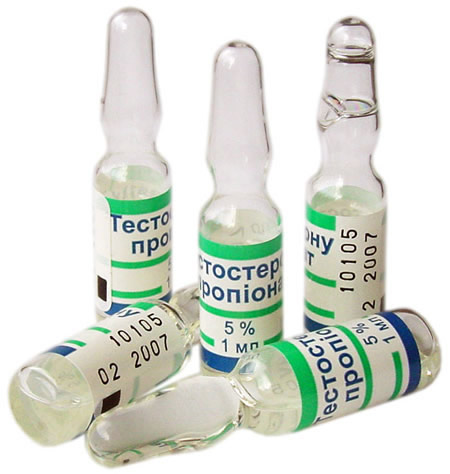
Steroids and the Lost Data of Self-Experiment
February 26, 2009
Not long ago I asked somebody I know with deep knowledge of athletes, athletic training, and performance enhancing drugs to talk to me about what I suspected was a “dark net” of self-monitoring and self-experimentation. Athletes track their performance in many ways. They measure speed, strength, weight, recovery time, and dozens of other variables. Those…
BLOG
Measuring Happiness and Mood
September 19, 2008
This is a quick post to request help/references. I’ve decided to add an emotional dimension to my self-measurement experiments. I’m currently measuring mood on a 1-5 scale. There is a lot of social science research on measuring mood. I’ll post some pointers in the next few days. But if others are measuring mood I’d be…
BLOG
Annals of Self-Experiment – Seth Roberts is His Own Mouse
May 31, 2008
I’m becoming a devoted fan of Seth Roberts, one of the great champion of self-experimentation. Roberts, an emeritus professor of psychology at UC Berkeley, has spent many year studying himself, and, even better, offering many practical clues about how to construct your own “experiments of one.” I first found out about his work in the…
BLOG
Self-Experimentation: The Case of Medical Marijuana
October 24, 2007
The history of “recreational” drug use and medical self-experimentation is deeply intertwined, especially when medicine is broadly defined to include psychology. In San Francisco, where I live, there are numerous [cannabis clubs](http://www.sanfranciscocannabisclubs.com/) selling pot to holders of medical marijuana cards. Over the last few months there’s been a burst of attention to the sometimes humorous,…
BLOG
Eleven Days Awake Self-Experiment
October 24, 2007
Bruce McAllister (left) and Joe Marciano Jr. (right) help Randy Gardner stay awake as he gets a checkup at the naval hospital. What happens if you force your self to stay awake. Can you control your sleep? How long can you stay awake? Most of us have no idea what our own body/minds would do….
BLOG
Self-experimentation with the anti-cancer drug DCA
October 8, 2007
People with particularly deadly forms of cancer can become desperate enough to self-experiment with non-approved drugs. Their ad hoc treatments can range in quality to random application or sometimes in concert with others trying the same thing, experiments with more value. New Scientist investigated a group of DCA self experimenters. In March 2007 they first…