BLOG
#WeAreNotWaiting by Dana Lewis
April 1, 2016
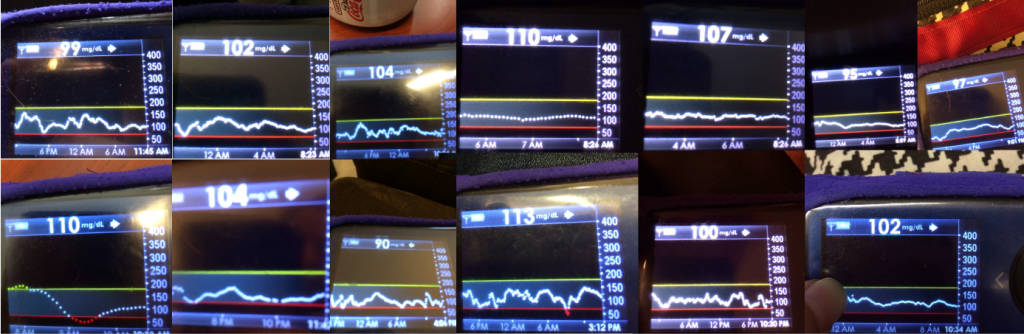
Dana Lewis and her partner Scott Leibrand have been developing a DIY artificial pancreas that is built on top of the data flows from Dana’s continuous glucose monitor. In this talk from QSPH15, Dana describes the role that access to data plays in the DIY pancreas, which has had immediate and profoundly positive effects on her life.
BLOG
Bridging the Gap by Aaron Coleman
March 30, 2016
Aaron Coleman has built his entire company, Fitabase, around the needs of researchers to authorize and integrate physical activity data from trackers like the Fitbit. In this talk from QSPH15, Aaron discusses what it takes to bridge the gap between the companies designing the devices generating health data and the researchers looking to make sense of it.
BLOG
Sharing Self-Collected Data by Andrei Pop
March 24, 2016
Andrei Pop is the co-founder of Human API, a platform for opening the world of self-collected data to health app developers. In this talk from QSHP15, Andrei argues for “data liquidity,” or democratizing health data sharing, as the key to unlocking value for all stakeholders.
BLOG
Making Health Data Accessible and Actionable by Drew Schiller
March 22, 2016
At QSHP15, Drew Schiller, the co-founder and CTO of Validic, a digital health data platform with many enterprise customers, shares his thoughts on how personal data can become more accessible and useful to the individuals who collect it.
BLOG
A New Type of Evidence by Dawn Lemmane
March 17, 2016
Dawn Lemanne is the founder of Oregon Integrative Oncology and leads the Independent Metabolic Research Group (iMeRG), a collaboration of licensed health professionals researching the effect of inexpensive lifestyle changes on managing chronic disease, using themselves as subjects. In this talk from QSPH15, Dawn discusses how the future of medical research may benefit from these kinds of single-subject trials.
BLOG
Learning from my N of 1 by Mark Drangsholt
March 15, 2016
Mark Drangsholt is a clinician scientist with a PhD in epidemiology who began self-tracking to gain insight into the sudden onset of episodes of irregular heartbeat, later diagnosed as atrial fibrillation (AF). In the years since, Mark has developed pioneering methods of self-investigation to solve his own health issues, which he describes in this talk from QSPH15 while explaining how these methods can drive advances in health discovery.
BLOG
Asking Myself 10,000 Questions by Brian Levine
March 10, 2016
Brian Levine is the co-founder of Tap2, the creator of the app younlocked. This tool helps users collect self-report data by asking questions during the phone unlocking process, a method that led Brian to answering almost 10,000 questions in a six-month period. In this talk from QSPH15, Brian shares details about his rich data set and the collection method that could become the foundation for many new personal and public health discoveries.
BLOG
Solving the Right Problem by Susannah Fox and Don Norman
March 8, 2016
In this discussion from QSPH15, Susannah Fox, the CTO of the U.S. Department of Health and Human Services, interviews cognitive scientist Don Norman, the author of the best-selling book The Design of Everyday Things, on how to bring human-centered design into public health.
BLOG
Opening Up Access by Madeleine Ball
March 3, 2016
Madeleine Ball, is the Director of Research for the Harvard Personal Genomes Project and co-founder of Open Humans, a platform and community that enables individuals to connect their personal data with research and citizen science. In this talk from QSPH15, Madeleine discusses the value of creating a new relationship between participants and scientists in which with both sides communicate, negotiate, and share responsibility over data.
BLOG
Make Advanced Self-Measurement More Accessible by Bob Evans
March 1, 2016
Bob Evans is the lead developer of PACO, an open source tool for supporting individual discovery and large scale participatory research. What began as a personal project to gauge his work experience by randomly querying himself throughout the day, PACO has grown into a platform for experimentation used in over one thousand projects designed by researchers, companies, and individuals. In this talk from QSPH15, Bob discusses how the individual quest for self-discovery connects with large scale research.
BLOG
The Patient Voice by Heidi Dohse
February 25, 2016
Heidi Dohse is “professional heart patient,” dedicated to bringing patient voices into the research environment as a member of the steering committee for the Health eHeart Alliance. In this talk from QSPH15, Heidi explains how the Health eHeart Alliance works as a valuable resource for humanizing the research process and tapping knowledge from the lived experience of patients to inform advances in healthcare.
BLOG
Friends in High Places
February 25, 2016
#Wearenotwaiting activist Dana Lewis talks data access at the White House.
BLOG
Participants at the Center by Michael Kellen
February 23, 2016
Michael Kellen is the Director of Technology at Sage Bionetworks, who was closely involved in the development of two of the apps that launched with Apple’s Research Kit: The Parkinson Disease mPower app and Share the Journey, a breast cancer survivors research app. In this talk from QSPH15, Michael explains what was involved in opening up a platform for large-scale research participation.
BLOG
Who Asks the Questions by Dawn Nafus
February 17, 2016
Dawn Nafus, is an anthropologist at Intel Labs who has written with great clarity about the Quantified Self movement. In this talk from QSPH15, Dawn explores the concept of data access and literacy in terms of who gets to ask the questions that direct research.
BLOG
Health Data Explorers by Kevin Patrick
February 9, 2016
Dr. Kevin Patrick is the director of the Center for Wireless and Population Health Systems at Calit2. At the 2015 Quantified Self Public Health Symposium, Kevin offered novel ways to think about the social utility of data.
BLOG
Scaling the QS Movement by Larry Smarr
February 3, 2016
Renowned physicist Larry Smarr is the founding director of the National Center for Supercomputing Applications (NCSA), who helped bring the power of computing to scientific research. In this talk from QSPH15, Larry reflects on consideration for scaling the QS movement and how the values encoded in tools created during the birth of new fields can influence future developments that affect hundreds of millions of people.
BLOG
Quantified Self Public Health Symposium
February 2, 2016
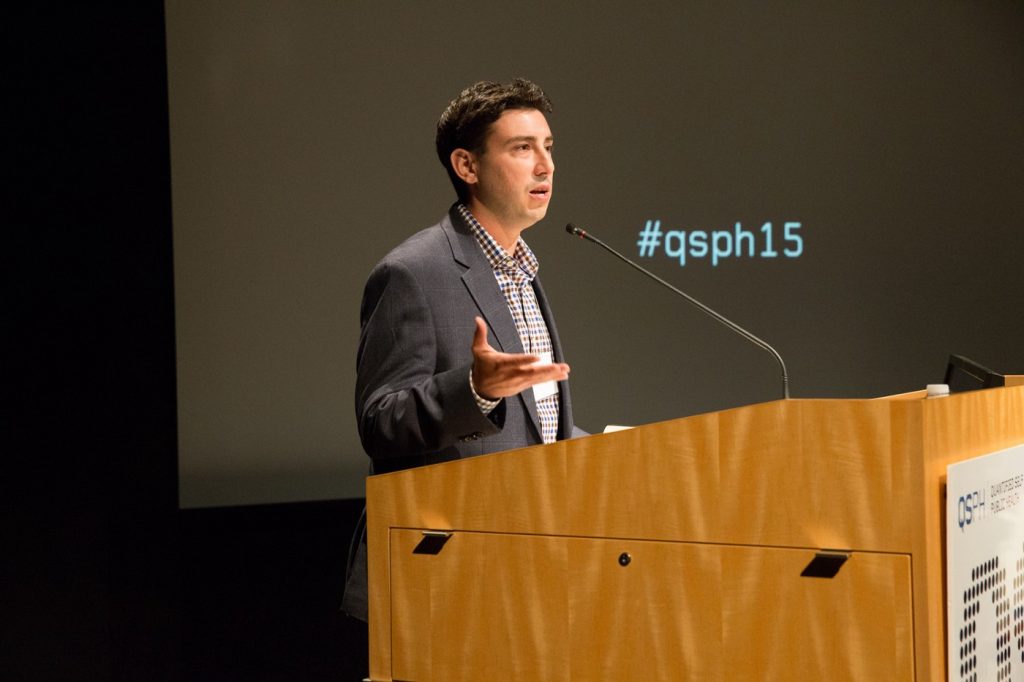
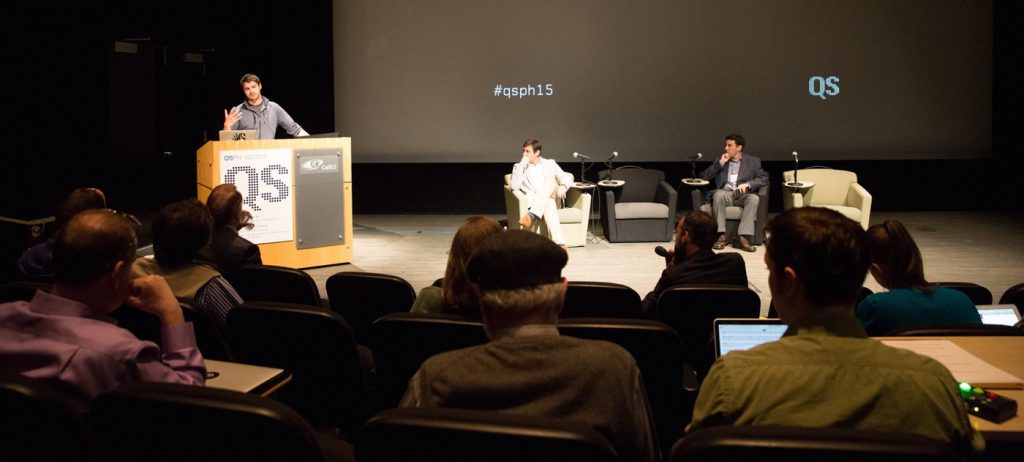
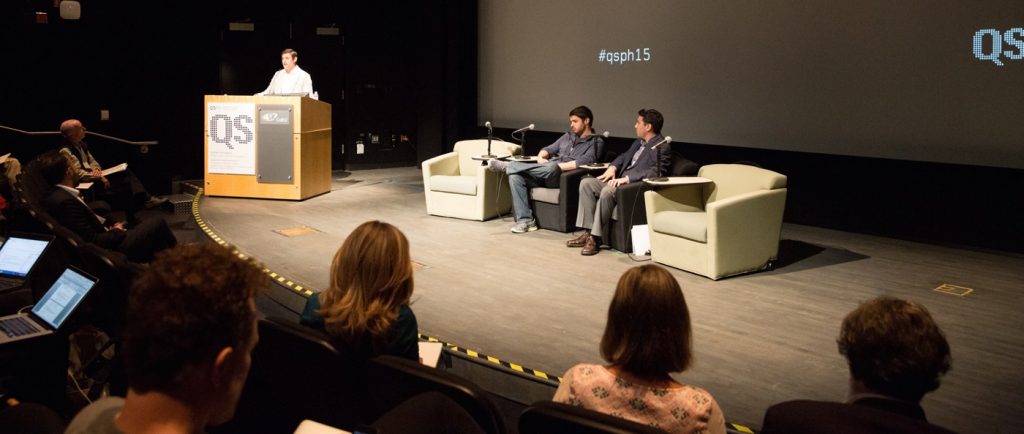
Many participants in Quantified Self meetings around the world are involved improving public health as researchers, policymakers, clinicians, and community leaders. Once a year, we convene a Quantified Self Public Health Symposium to explore how we can better support new discoveries about ourselves and our communities.
BLOG
Finding My Optimum Reading Speed by Kyrill Potapov
January 21, 2016
As an English teacher Kyrill Potapov spends a lot of time working with 12 year old kids who are trying to improve their reading, writing, comprehension, and analytical skills. In this talk, he explores a remarkable method of speed reading, called Spritz, that promises to let you “read Harry Potter in three hours” with full…
BLOG
QS Symposium on Pain and Innovation Challenge
October 8, 2015
Do you have a Quantified Self idea that can help ease the burden of pain? On November 5th, 2015, we’re convening the first QS Symposium on Pain and Innovation Challenge on the campus of Singularity University at the NASA Ames Research Center in Mountain View, California. For this meeting, we’re trying a new kind of…
BLOG
QS Access: See Your HealthKit Data in a Table
September 16, 2015
A year ago we released QS Access, a simple app that allows you to see your healthkit data in a table. Our idea was to make it easier for people to explore their data using familiar tools, such as Numbers, Excel, or any spreadsheet program that can open a .csv file. We’ve really enjoyed hearing its…